How to Exfoliate Your Face Gently: A Guide to PHA Renewal Scrub
Skincare education · Exfoliation
How to Exfoliate Your Face Gently
Why controlled exfoliation can support smoother, brighter-looking skin without treating irritation as proof that a product is working.
Clinically reviewed by Dr Dev Patel · Approx. 9-minute read
Quick answer Yes, PHA exfoliates. Polyhydroxy acid works by gently loosening dead skin cells on the surface, supporting steady skin renewal without the harsher feel some exfoliants can create. That makes it especially relevant if you want smoother, brighter-looking skin but need a gentler, barrier-conscious approach, whether your skin is sensitive, reactive, or showing signs of age. Exfoliating helps remove dead surface cells that can leave the complexion looking dull, rough or congested, but harsh scrubs, excessive friction and overuse of exfoliating acids can compromise the skin barrier. Below, we explain how exfoliation works, how physical and chemical exfoliation differ, where PHAs fit in skincare, how to spot over-exfoliation, and how to use CellDerma PHA Renewal Scrub as part of a healthy routine.
A more intelligent approach
Exfoliation Has Evolved
For years, exfoliation was associated with coarse facial scrubs, strong acids and the belief that tightness or tingling meant a product was working.
Skincare has moved on. Modern routines lean on gentler skincare ingredients instead of stronger acids, because healthy skin does not need to be scrubbed aggressively or repeatedly stripped of its surface cells. When exfoliation is too frequent or too intense, it can disrupt the skin barrier and leave the complexion looking red, dry, reactive or dull—the opposite of the intended result.
Modern exfoliation is not about removing as much as possible. It is about encouraging controlled, consistent surface renewal to support cell turnover without over-stripping the surface, while respecting the structures that keep skin functioning properly.
The fundamentals
What Does Exfoliating Your Face Actually Do?
Dead skin cells naturally accumulate at the surface of the skin before they are shed. When this surface build-up becomes uneven, the skin may look dull, feel rough and flaky, and affect overall skin texture. It can also make skincare and make-up appear less even.
Exfoliation helps loosen or lift away some of this surface build-up. Depending on the method used, it may help improve the visible appearance of:
- Dullness and reduced radiance
- rough skin texture, as exfoliation improves skin texture
- Dry, flaky patches
- Congested-looking skin
- The appearance of fine surface lines
The objective is not to make the skin feel raw, tight or “squeaky clean”. Appropriate exfoliation should leave the complexion feeling smoother and fresher while remaining comfortable.
Understanding the difference
Physical vs Chemical Exfoliation
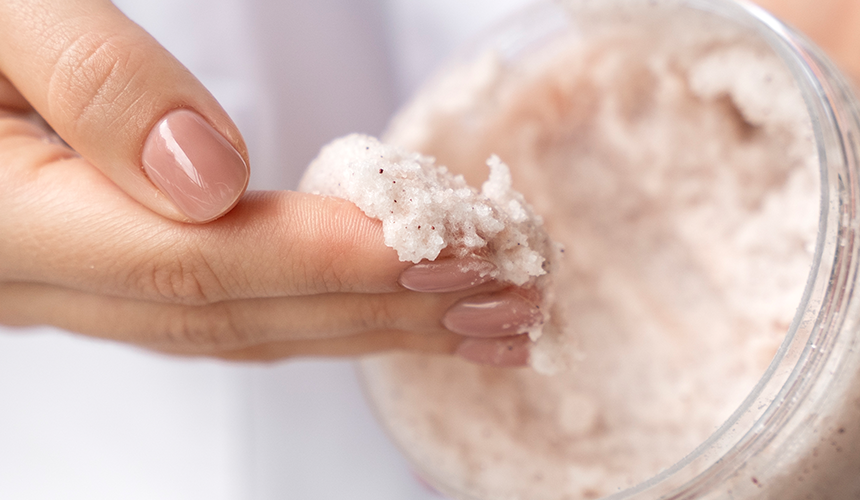
Physical exfoliation uses fine particles or a textured surface to manually lift dead cells and debris from the skin. How gentle it feels depends on the shape and size of the particles, the formulation and the amount of pressure used.
Chemical exfoliation uses ingredients such as alpha hydroxy acids, beta hydroxy acids or polyhydroxy acids, and in the usual aha vs bha comparison, PHAs are generally milder. salicylic acid is a BHA that is oil soluble, so it can work deeper in pores, while PHAs tend to stay more surface-level and are often less irritating than AHAs and BHAs for sensitive skin.
Neither method is automatically better for every person. What matters is the complete formulation, the strength of the exfoliant, how frequently it is used, and whether your skin type, concerns such as oily skin, and overall tolerance make one option a better fit.
Ingredient education
What Is PHA in Skincare?
PHA stands for polyhydroxy acid. Like AHAs, PHAs help loosen dead cells at the skin’s surface, and examples include lactobionic acid. However, PHA molecules have a larger molecular structure, so they penetrate more slowly, work more gradually at the surface, and are often a good alternative for sensitive skin types who find stronger exfoliating acids uncomfortable.
PHAs also have hydrating properties, and their humectant properties mean they act as humectants by drawing moisture into the skin and offer additional moisturising properties compared with AHAs. This makes them particularly relevant to formulas designed to exfoliate while maintaining a hydration-conscious, barrier-aware approach.
Barrier-conscious skincare
Why Gentle Exfoliation Often Works Better for Sensitive Skin
One of the most common exfoliation mistakes is assuming that stronger products or more frequent use will produce faster results, even though barrier-friendly exfoliation is often more non irritating than pushing the skin with high concentrations or constant use.
When the skin barrier is repeatedly disrupted, the complexion may become red, dehydrated and increasingly sensitive. Gentler formulas can also suit aging skin or skin showing early skin damage without adding unnecessary stress. The skin can start to feel rough or tight even though the routine is intended to make it smoother.
Consistent, controlled exfoliation is generally more useful than aggressive treatments that leave the skin struggling to recover. The healthiest result is skin that looks clearer and more refined while still feeling calm and comfortable.
How Do You Know If You Are Over-Exfoliating?
Signs that your routine may be too intense can include:
Persistent redness
Redness that does not settle shortly after use can indicate irritation.
Stinging
Products that previously felt comfortable may begin to sting on application.
Tightness and flaking
Skin may feel dehydrated, dry or unusually tight despite using moisturiser.
Increased sensitivity
Weather, heat and everyday products may begin to trigger discomfort and even skin irritation.
Shiny but dehydrated skin
The surface may appear unusually glossy while still feeling tight.
New irritation
A challenged barrier can make the complexion look inflamed or unsettled.
Meet the formula
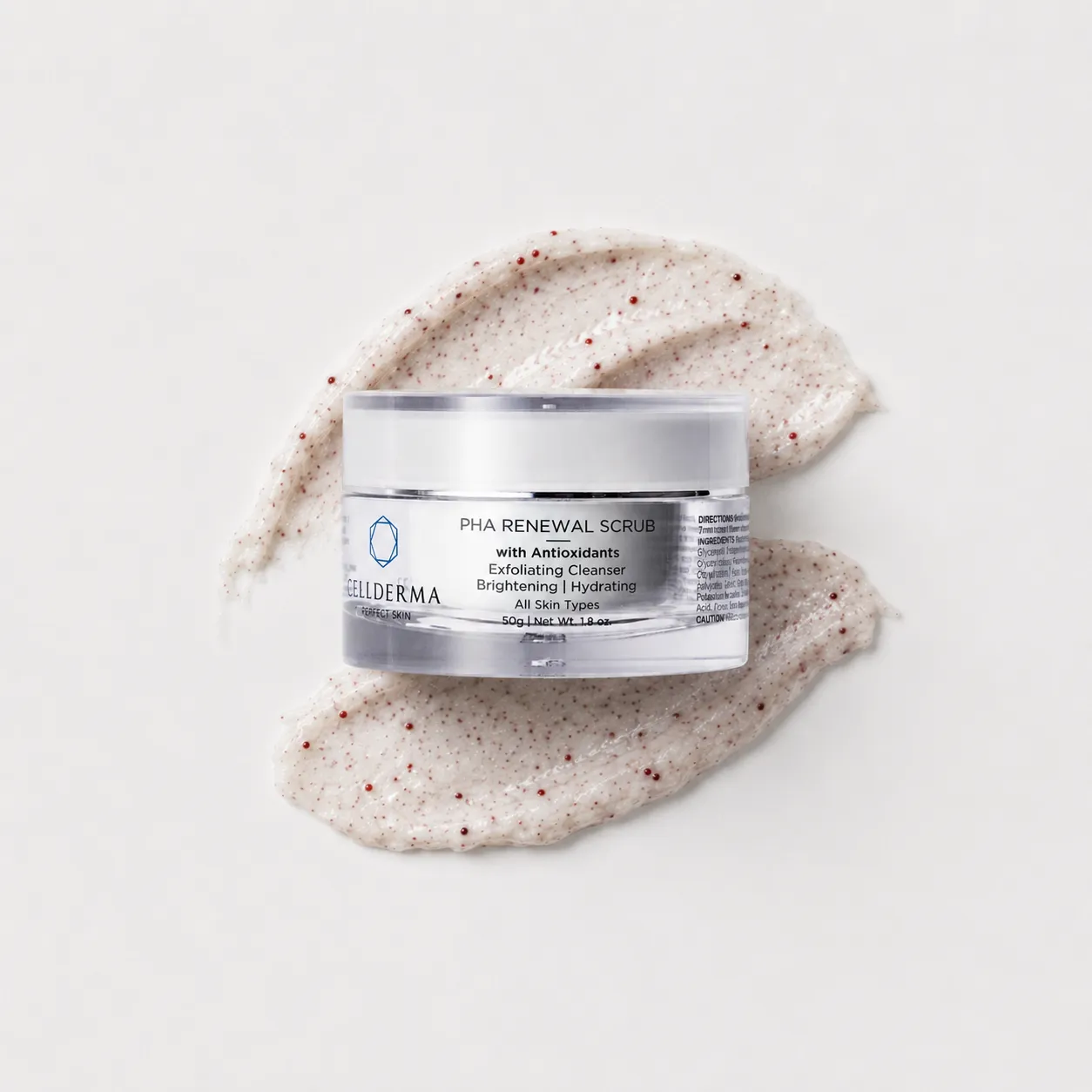
CellDerma PHA Renewal Scrub
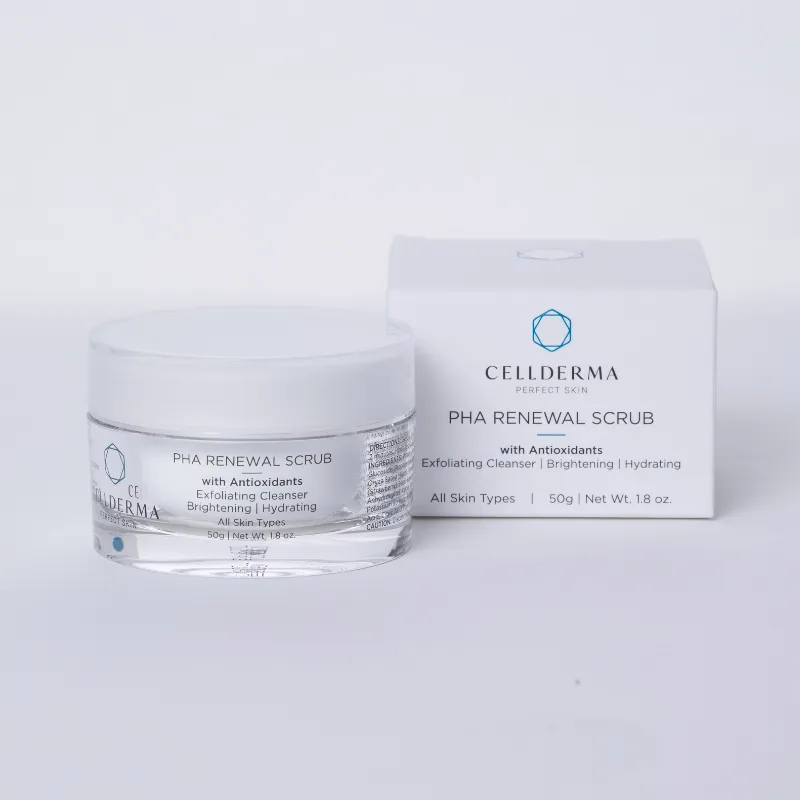
CellDerma PHA Renewal Scrub is one of the brand’s PHA products, combining chemical and physical exfoliation within one balanced formula as part of a broader range of skincare products. Polyhydroxy acid technology works alongside carefully selected natural exfoliating particles and antioxidant-rich botanical ingredients found across modern skin care products focused on gentle renewal.
The formula is designed to lift surface build-up and support skin that looks smoother, brighter, more refined, and more even in skin tone—without making aggression the measure of effectiveness.
PHA Renewal Scrub may be particularly useful for:
- Dull or tired-looking skin
- Rough or uneven surface texture
- Dry flakes and surface build-up
- Congested-looking skin
- Loss of visible radiance
This kind of balanced formula can also suit skin that does not tolerate stronger exfoliants well.
Inside the formula
More Than an Exfoliating Scrub
PHA Renewal Scrub is formulated to support skin quality from several directions. Its ingredients work together to exfoliate, hydrate, nourish and provide antioxidant support.
Polyhydroxy acids
Help loosen dead surface cells while supporting a gentler, hydration-conscious approach, with antioxidant properties that help defend against environmental stressors and anti inflammatory benefits that can calm reactive skin; when skin is especially reactive, a lower concentration formula is often the better choice.
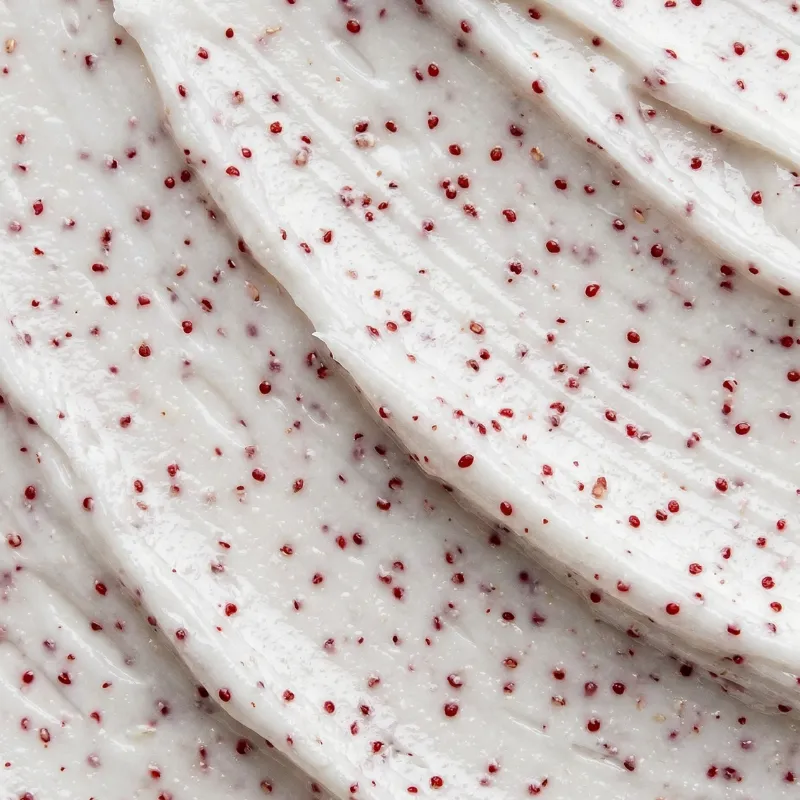
Strawberry seed
Provides physical exfoliation to help buff the skin surface and improve the feel of rough texture.
Rice powder
A finely milled natural exfoliant that helps lift surface build-up.
Jojoba seed oil
A lightweight botanical oil included to nourish the skin after exfoliation.
Antioxidant botanicals
Blackcurrant, cloudberry, goji berry, ginseng, Kakadu plum and lingonberry, together with soothing ingredients such as aloe vera when used in skincare, support a fresher-looking complexion and help protect against environmental stressors.
Balanced exfoliation
Chemical and physical exfoliation are combined so the formula does not rely on harsh abrasion alone. That balanced approach can also be useful when pairing PHAs with other acids, though spacing actives helps reduce the risk of over-exfoliating.

Routine guidance
How to Use PHA Renewal Scrub
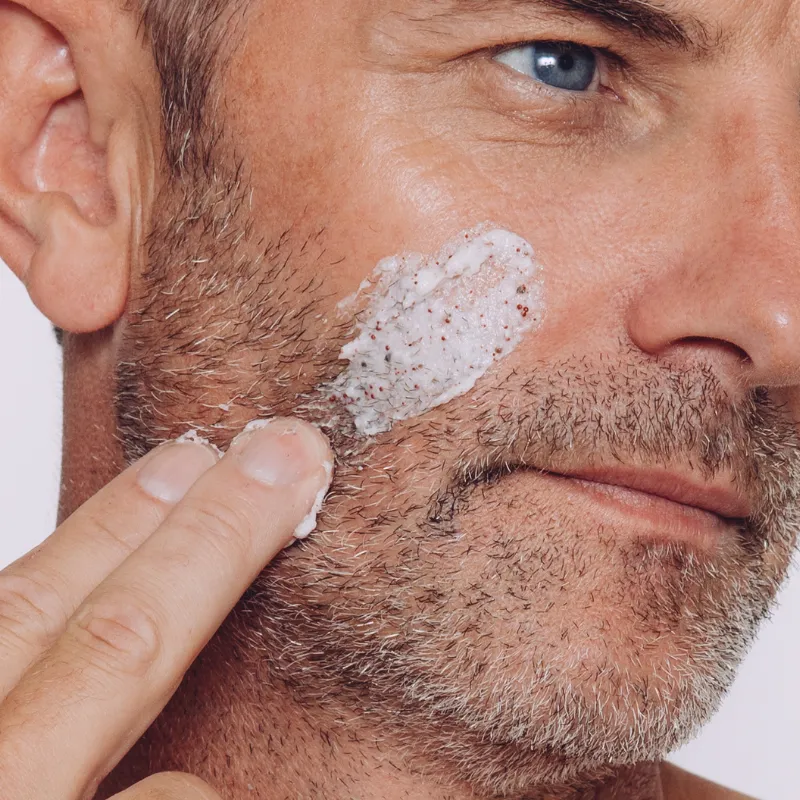
Use PHA Renewal Scrub two to three times each week as part of your skincare routine, adjusting the frequency according to your skin’s tolerance and the other active ingredients in your routine. Some leave-on PHA formulas can be used daily without causing irritation for most skin types, depending on the formula and your tolerance.
01
Cleanse gently with Hydraclean to remove make-up, sunscreen and surface impurities.
02
Apply PHA Renewal Scrub to damp skin. If you are using a leave-on PHA toner instead, sweep it on with a cotton pad rather than massaging it like a scrub.
03
Massage lightly without applying excessive pressure.
04
Rinse thoroughly and gently pat the skin dry.
05
Follow with a suitable serum. For barrier and regenerative support, apply GF5® Next Generation .
06
Apply moisturiser afterwards if required. You can also layer hyaluronic acid to support deep hydration after exfoliation.
07
During the day, use broad-spectrum SPF. PHAs do not significantly increase sun sensitivity, but daily protection is still recommended. A morning antioxidant serum such as Vitamin C Complex can also support protection against environmental oxidative stress.
Frequency matters
Start Slowly and Observe Your Skin
If your skin is reactive, you are new to exfoliation, or you already use a retinoid or another exfoliating acid, begin less frequently and do a patch test before first use, gradually increasing only as your skin tolerates the formula comfortably.
Your skin should not feel persistently sore, tight, hot or uncomfortable after use. If it does, pause exfoliation and prioritise a simpler, barrier-supportive routine.
Learn more about the role of the skin barrier and why it is so important .
The long-term view
Healthy Exfoliation Is About Removing Just Enough
The healthiest skin is not created by removing more. It is created by removing just enough.
Consistent, barrier-conscious exfoliation can support smoother texture, improved radiance and healthier-looking skin without unnecessary irritation.
PHA Renewal Scrub reflects that approach by combining PHA technology, carefully selected physical exfoliants, nourishing oils and antioxidant-rich botanicals.
Frequently asked questions
Common Questions About Facial Exfoliation
How often should you exfoliate your face?
Most people do not need to exfoliate every day. One to three times per week may be enough, depending on your skin type, the product being used and the other active ingredients in your routine. Dry, sensitive or reactive skin should usually begin less frequently.
Should you exfoliate before or after cleansing?
Exfoliate after cleansing. Cleansing first removes make-up, sunscreen, oil and surface impurities, allowing the exfoliating product to work more evenly. A gentle cleanser such as Hydraclean can be used before exfoliation.
Follow the individual product directions because some scrubs are intended for damp skin while certain leave-on acids are applied to dry skin.
What is the difference between a scrub and a chemical exfoliant?
A facial scrub uses fine particles to physically lift dead cells and surface build-up. A chemical exfoliant uses ingredients such as AHAs, BHAs or PHAs to loosen the bonds between dead surface cells. The Inkey List PHA Toner contains 3% gluconolactone. Some formulas, including PHA Renewal Scrub , combine both methods.
Are facial scrubs bad for your skin?
Facial scrubs are not inherently bad, but coarse particles, excessive pressure and overuse can irritate the skin. Choose a well-formulated product, use light pressure and stop if the skin becomes persistently sore, red or tight.
Can you exfoliate sensitive skin?
Some sensitive skin can tolerate exfoliation, but it requires a gentler and less frequent approach. PHAs are often selected for sensitive-feeling skin because their larger molecular size means they generally work more gradually at the surface. Eadem’s Cashmere Peel contains gluconolactone and lactic acid. They are also often considered a good alternative because they are generally non irritating for many sensitive skin types.
Is PHA gentler than AHA?
PHAs are generally considered gentler than many AHAs because their molecules are larger and penetrate the skin more slowly. SkinCeuticals P-Tiox Serum includes 5% gluconolactone. Individual tolerance still depends on the full formula, concentration, frequency of use and condition of the skin barrier.
Can exfoliating help clogged pores?
Exfoliation can help remove surface build-up and dead cells that may contribute to a congested appearance. For acne-prone or oily skin, salicylic acid is a common BHA because it is oil soluble and better suited to excess oil and oil control. Persistent acne, inflamed spots or deeper congestion may require a more targeted approach rather than more frequent scrubbing.
Can you exfoliate active acne?
Avoid aggressively scrubbing inflamed, broken or painful acne because friction can increase irritation. A gentle exfoliating formula may suit some acne-prone skin, but the appropriate method depends on the type and severity of the acne.
Can you exfoliate while using retinol?
Yes, but using both too frequently may increase dryness and irritation. Be especially cautious about combining PHAs too often with glycolic acid, lactic acid, citric acid, or other acids, particularly at higher strengths, as board-certified dermatologist guidance often recommends. Glow Recipe’s toner combines 3% gluconolactone with BHA. Introduce products gradually, consider using them on different evenings and reduce the frequency if the skin becomes tight, flaky, red or uncomfortable.
What should you apply after exfoliating?
After exfoliating, apply products that hydrate and support the skin barrier. Hydrating skincare products can also help the skin retain moisture after exfoliation. A serum such as GF5® Next Generation may be used as part of a barrier-supportive evening routine, followed by moisturiser if required.
During the day, apply broad-spectrum SPF consistently. A morning antioxidant serum such as Vitamin C Complex can form part of the daytime routine.
How do you know if you are over-exfoliating?
Signs can include persistent redness, stinging, unusual tightness, dryness, flaking and increased sensitivity. Pause exfoliation and simplify the routine if normally comfortable products suddenly sting or the skin feels persistently sore.
Read more about the skin barrier and its role in healthy skin .
Is it better to exfoliate in the morning or evening?
Exfoliating in the evening is often practical because it can be followed by a simple hydrating routine. Either time can work when the product directions are followed and broad-spectrum SPF is used during the day.
How long does it take to see results from exfoliating?
Skin may feel smoother immediately after physical exfoliation, but visible improvements in dullness and texture usually require consistent use over time. Visible improvements in skin texture often appear after 4-6 weeks of consistent use. Consistent use may also support smoother texture and more even tone over time, including in skin affected by sun damage. Exfoliating more frequently does not necessarily create faster results and may instead cause irritation.
How often should I use CellDerma PHA Renewal Scrub?
Use PHA Renewal Scrub two to three times per week, gently massaging it onto damp skin before rinsing thoroughly. People with reactive or sensitive-feeling skin should introduce it more gradually and adjust use according to tolerance, oil production, dryness, and how well the skin tolerates active ingredients.
Can I use PHA Renewal Scrub with Retin-ACE®?
PHA Renewal Scrub and Retin-ACE® can form part of the same wider routine. Those who are new to retinoids or prone to sensitivity may prefer to use them on different evenings. Reduce frequency if the skin develops persistent dryness, redness, stinging or discomfort.