CellDerma clinical guide
Melasma, Sunspots or Post-Inflammatory Hyperpigmentation?
How I distinguish them by pattern, trigger and behaviour.
By Dr Dev Patel, MB BS, PgDip(Derm), MRCGP, Founder of CellDerma and Aesthetic Physician.
Explore Pigment CorrectThe short answer: melasma usually appears as broader, often symmetrical brown patches and is commonly influenced by hormones, UV exposure and heat. Sunspots, also called solar lentigines, are more localised marks linked with accumulated UV exposure. Post-inflammatory hyperpigmentation appears after inflammation or injury, such as acne, dermatitis, burns or procedures.
Why pigment is so easy to misread
Many people call every brown mark ‘pigmentation’, but not all pigmentation behaves in the same way. I see a great deal of frustration when every mark is treated as a simple dark spot, particularly when the underlying driver is hormonal, inflammatory or still being triggered by UV exposure.
Hyperpigmentation describes darker areas caused by excess melanin production. The cause may be melasma, accumulated photodamage or a post-inflammatory change. My starting point is always to identify the likely trigger before building the routine.
Melasma vs sunspots vs PIH: a quick comparison
| Pattern | Typical appearance | Common trigger or context | Key point |
|---|---|---|---|
| Melasma | Broader, often symmetrical brown patches | Hormones, UV exposure and heat | Often recurrent; irritation and UV control matter |
| Sunspots | More discrete, localised brown marks | Accumulated ultraviolet exposure | Usually found on chronically sun-exposed areas |
| Post-inflammatory hyperpigmentation | A mark left after inflammation or injury | Acne, dermatitis, picking, burns or procedures | Further irritation can prolong the pigment response |
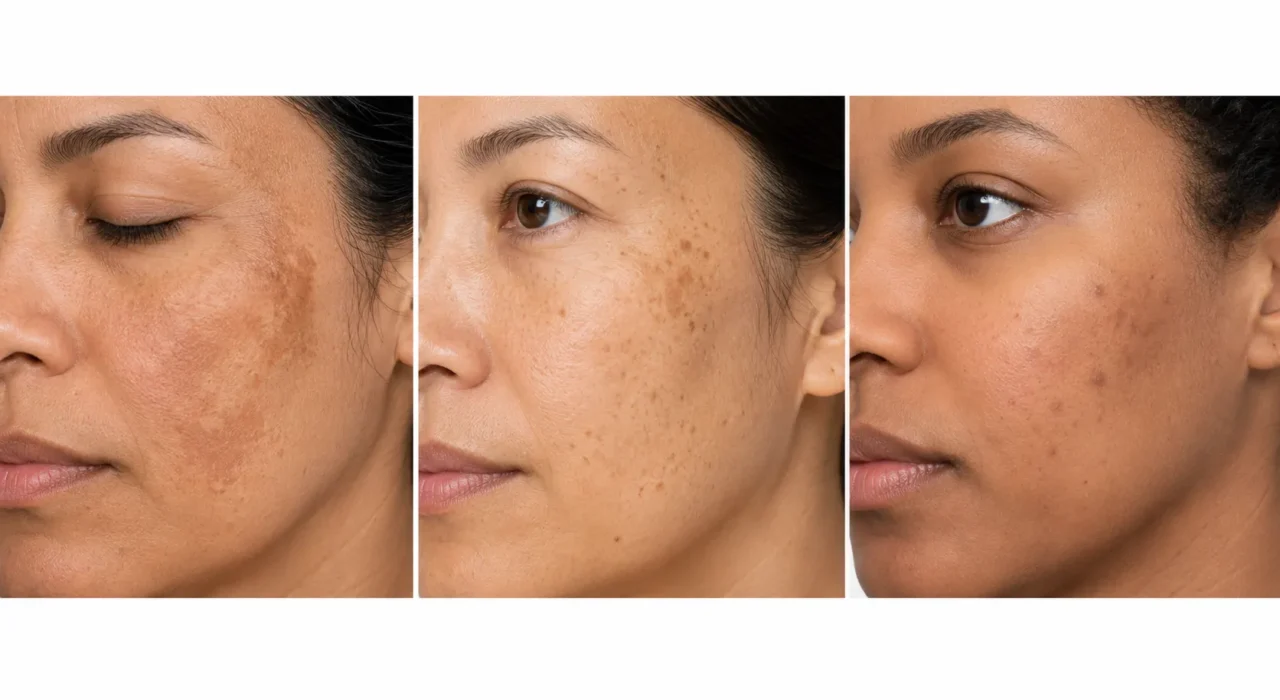
How the three pigment patterns tend to differ
What does melasma look like?
Melasma often appears on the face as light-to-dark brown patches. It may be symmetrical, especially across the cheeks, forehead, upper lip or jawline. It is commonly influenced by hormonal factors, UV exposure and heat.
Melasma is not simply a stain on the skin. It tends to relapse if the triggers remain active, which is why daily photoprotection and irritation control are central to management.
What do sunspots look like?
Sunspots, or solar lentigines, are localised brown marks associated with ultraviolet exposure. They are common on sun-exposed areas such as the face, hands, shoulders and chest.
They usually behave differently from melasma because they are more discrete and linked with accumulated exposure rather than a wider hormonal pigment pattern.
What is post-inflammatory hyperpigmentation?
Post-inflammatory hyperpigmentation, or PIH, follows inflammation or injury. Acne, eczema, dermatitis, picking, burns, shaving irritation and aesthetic procedures can all leave pigment behind, particularly in pigmentation-prone skin.
This is why I am cautious about aggressive pigment routines. If the skin is repeatedly inflamed, the pigment pathway can continue to be stimulated and the problem may become harder to manage.
How I approach the pigment pathway without over-treating it
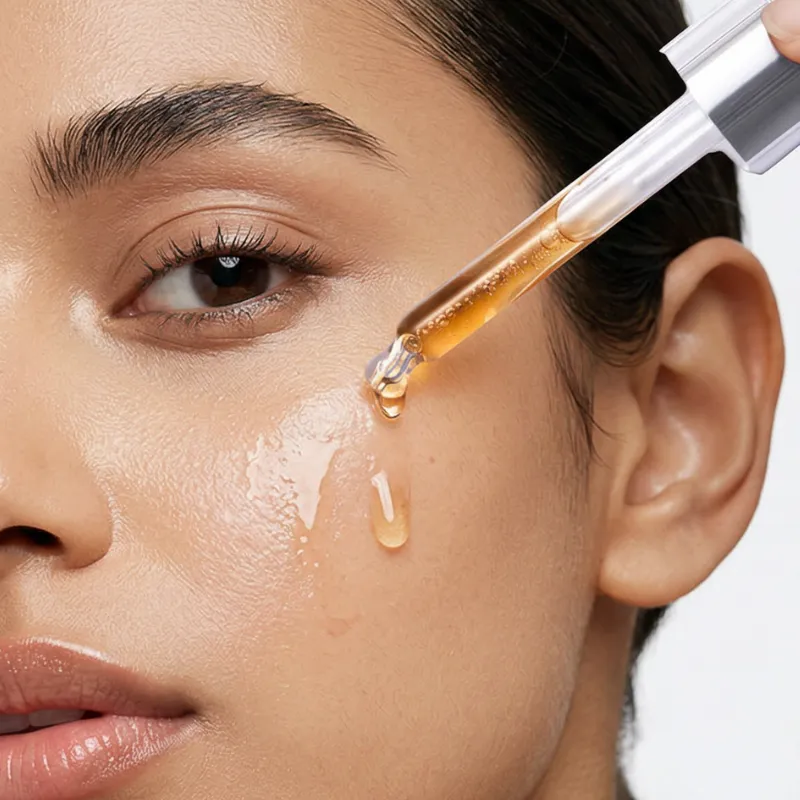
Within a CellDerma routine, I may use Pigment Correct to help improve the appearance of dark spots, uneven tone, discolouration, melasma-type pigmentation and post-inflammatory-looking marks. Its key actives include Arctostaphylos Uva Ursi Leaf Extract, Kojic Acid, Rumex Occidentalis Extract and Nonapeptide-1, selected to act on pathways associated with visible pigmentation and uneven tone.
Where the skin is also dull, aging or uneven, I may consider Retin-ACE® when it is appropriate for the individual.
Retinoids are not suitable for everyone. Retin-ACE® should not be used during pregnancy or breastfeeding.
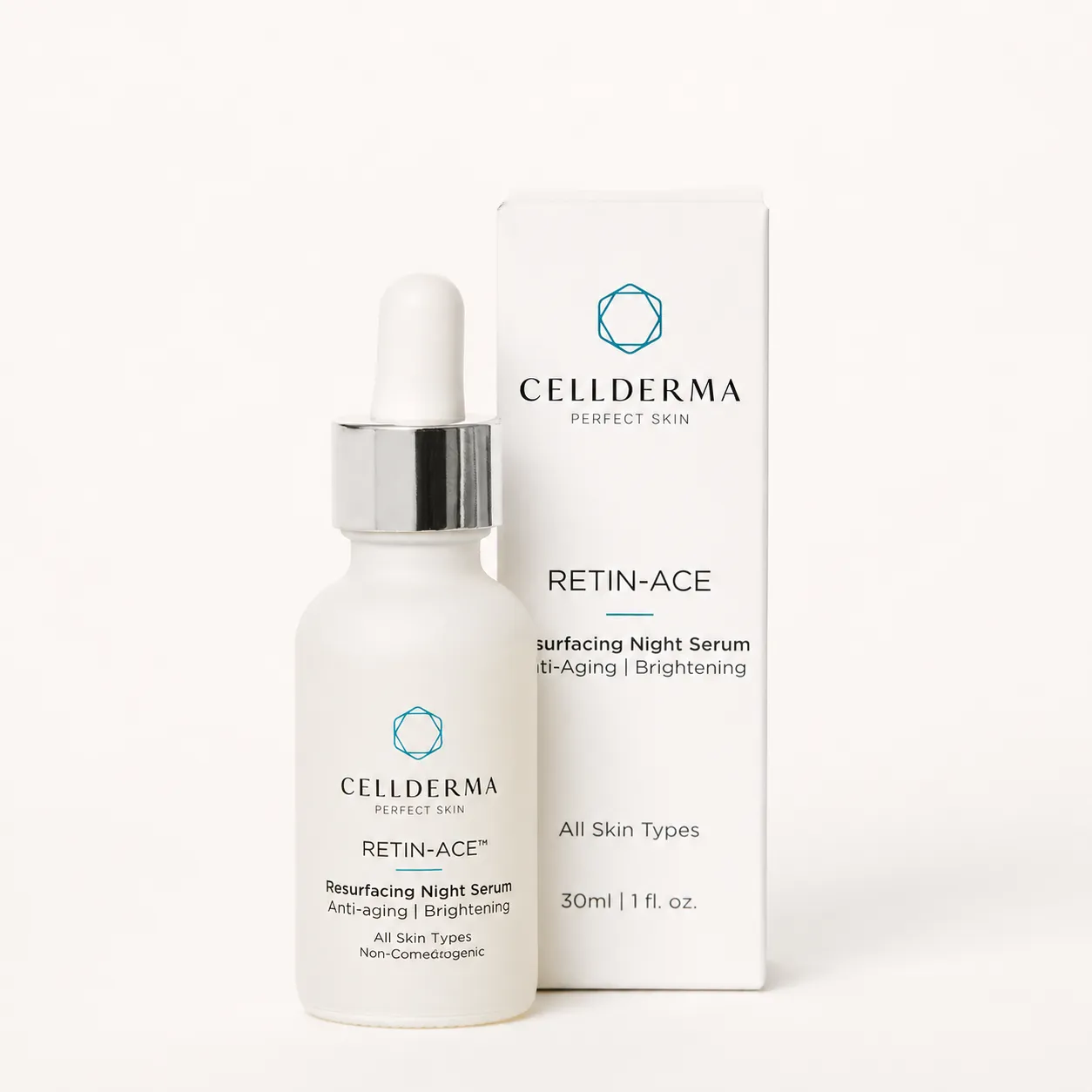
Retin-ACE®
For dullness, uneven tone and visible aging, where appropriate for the individual.
View Retin-ACE®A simple skincare routine for pigmentation
A pigment routine is only as strong as its UV protection. Ultralight Mineral SPF 25 is a lightweight broad-spectrum SPF 25 designed to sit well under make-up. Sunscreen choice and reapplication should still be adapted to the person’s skin risk, location and level of exposure.
| Step | Product | Time | Role |
|---|---|---|---|
| Cleanse | Hydraclean | AM and PM | Gentle cleansing without over-stripping |
| Target pigment | Pigment Correct | AM and PM | Helps improve dark spots, uneven tone and discolouration |
| Antioxidant support | Vitamin C Complex | AM and/or PM | Antioxidant and brightening support |
| Evening active | Retin-ACE® | PM, where appropriate | Dullness, uneven tone and visible aging |
| Protect | Mineral zinc-oxide sunscreen | AM | Daily broad-spectrum SPF protection |
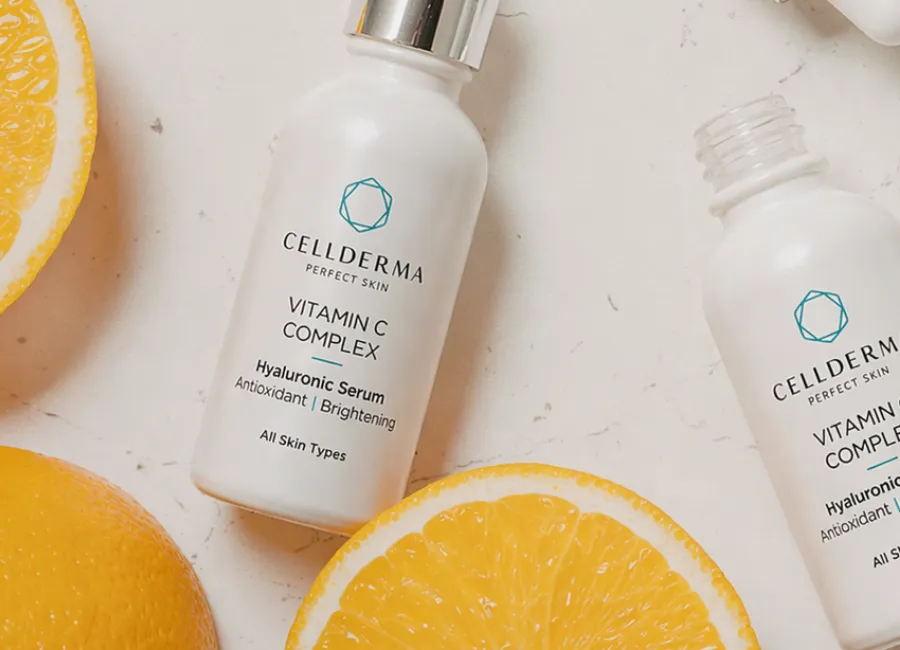
Vitamin C Complex
Antioxidant and brightening support within a balanced pigmentation routine.
View Vitamin C ComplexWhen I would advise professional assessment
I would always advise clinical assessment if a patch is changing, irregular, bleeding, crusting, new, very dark or unlike your usual pigmentation. This article can help you understand common patterns, but it cannot diagnose an individual mark.
Frequently asked questions
How do I know if I have melasma or sunspots?
Melasma often appears as broader, symmetrical patches and may be linked with hormones, heat and UV exposure. Sunspots are usually more defined marks on chronically sun-exposed areas. A clinician can confirm the diagnosis if the distinction is unclear.
Can acne marks turn into pigmentation?
Yes. Post-inflammatory hyperpigmentation can follow acne, dermatitis, picking, burns or procedures. It is pigment left after inflammation rather than a true textured scar, although both can occur together.
Does sunscreen help pigmentation?
Yes. UV exposure can worsen many pigment patterns and make marks more persistent. Daily broad-spectrum sunscreen, shade and sensible sun behaviour are foundational parts of pigmentation management.
Can Pigment Correct be used for melasma?
Pigment Correct may be used as part of a cosmetic routine to help improve the appearance of melasma-type pigmentation. Persistent, recurrent or changing patches should be assessed by a clinician.
What is the best serum for melasma and PIH?
There is no single best serum for every pigment pattern. Pigment Correct is intended to help improve the appearance of dark spots, uneven tone, discolouration, melasma-type pigmentation and post-inflammatory-looking marks.
Can procedures trigger pigmentation?
Yes. Inflammation after microneedling, RF microneedling, laser or chemical peels can contribute to post-inflammatory hyperpigmentation, particularly in pigmentation-prone skin.
Dr Dev Patel
MB BS, PgDip(Derm), MRCGP
Founder of CellDerma and Aesthetic Physician